Lauraine’s blog
10 February 2012
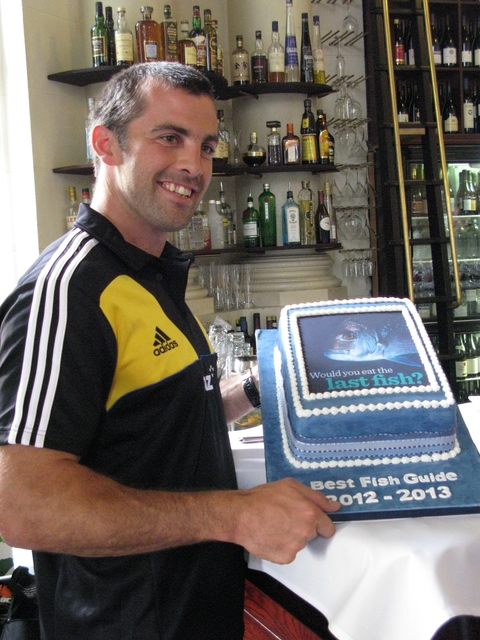
It's rare to sight an All Black on my food pages, but this week I met Conrad Smith, pictured above, at the launch of Forest & Bird's new Best Fish Guide.
He's cutting a 'fish cake' which is a far cry from the fishcakes in the posting below this. We got to enjoy the moist chocolate cake after eating a spicy kingfish curry Conrad had cooked alongside Shaun Clouston, Logan Brown's head chef. We also ate a selection of tasty hors d'oeuvres made from such highly endorsed fish like kahawai, paua, kingfish, trevally and more.
Forest & Bird put careful research into their listings of fish and rate all fish caught in New Zealand waters from Best Choice through to Worst Choice. This list is available on their website www.bestfishguide.org.nz where you can also download the Best Fish Guide mobile app.
The work is extensive but now the real work begins as we must find ways to get fish shops, supermarkets and recreational fishermen to source the fish at the top of the list. This means we all need to learn to seek and cook such fish as anchovies, pilchards, kahawai, trevally, sprats and butter fish. Quite the challenge.
Who's up for it? I am!
6 February 2012
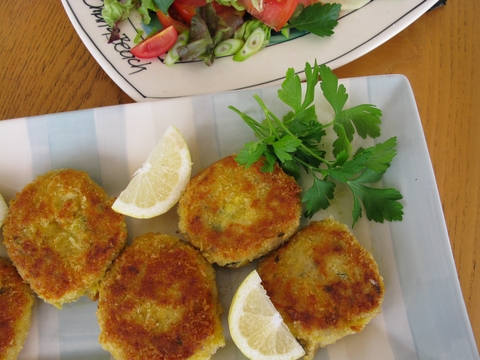
It’s Waitangi Day, supposedly a day of celebrating our freedom and alliance with the Crown. The usual shenanigans in the north have passed me by as a very vocal minority use the occasion yet again to air grievances very rudely and with utter contempt for others.
It has had me thinking however as the Waitangi holiday marks the end (for the meantime) of my own summer holiday which I have managed to make last for seven weeks. I’m cleaning out my fridge and thinking about the paucity of fish this year. My husband blames trawlers that come in the night and sweep the local ocean so there’s hardly a fish for the recreational fishermen.
I have been lucky as Royal Forest and Bird asked me to contribute a recipe for their sustainable fish guide out this week. As they needed an accompanying photo, it was dependent on me having the right fish to work with. The husband came up trumps. He went out in his boat and came back proudly with a 1 meter long kingfish and a fat kahawai; both near the top of the RF&B’s sustainable fish list. My recipe is for tea smoked kahawai, and I will post it in the recipe section here.
But sustainability is more than just a list of fish. It is the practice of not wasting anything and ensuring the future generations have at least, if not more, than the present. It is using everything that’s brought into the house to eat, returning goodness to the land and having respect for land, sea and air. So instead of firing out leftovers from the fridge, I used the bits and pieces to make the fabulous fishcakes above for our lunch.
Scrappy ends from some kingfish, a chunk of that tea smoked kahawai, lemon rind and two cooked potatoes were whizzed together in the food processor with a spring onion and some thyme from my herb garden. I then made a ‘panade’ which is a fancy way of saying a thick white sauce mixture, to bond the cakes together; melt 2 tbsps buffalo butter, add 2 tbsps white flour, ½ tsp ground cumin, salt and pepper and stir until the flour starts to cook. Tip in about 5 tbsps milk and stir constantly until thick and bubbling. Add this to the fish, stirring well and season to taste. Form into six fishcakes, dip these in beaten egg and then into panko crumbs. Refrigerate until needed. To cook, melt a little butter in some olive oil in a heavy frying pan and gently cook the cakes on both sides until they’re golden. Serve at once with some spicy sauce and a salad of fridge leftovers.
I’m feeling virtuous as I associate this meal with another of my steps toward the sustainability of Aotearoa. Perfect food for Waitangi Day.
3 February 2012
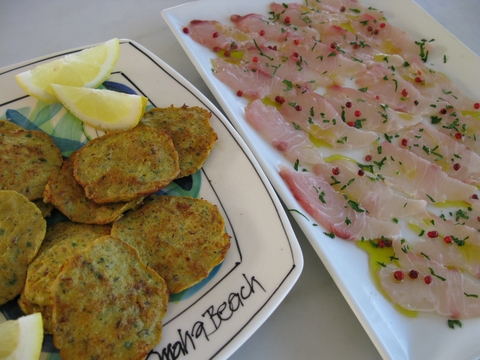
With good friends invited for dinner on the weekend, I challenged myself to provide an appropriate fishy dinner for our beach setting.
I served a meal that was entirely local, and we became hunters and gatherer to find seafood for our feast. I plunged into the ocean to gather tuatuas for fritters, while the husband went fishing. He's a star; returned with a large kahawai and a 1 metre kingfish. So we had the makings of a fine meal, and all the fish is on the sustainable list; in other words there’s plenty there and the species are not threatened.
We started with the tuatua fritters pictured above, plus that sashimi kingfish dressed with lemon juice, olive oil, parsley, pink peppercorns and salt. Then came the gorgeous smoked kahawai with a salad. I love to marinate the kahawai in ponzu (Japanese soy with citrus and seaweed) and brown sugar and then smoke it over aromatic tea leaves.
The main was pan-fried kingfish with lemon, new potatoes and delicious local vegetables; beetroot, fried aubergines that were simmered in tomato and garlic, and steamed green beans.
To finish, ice cream, jelly, berries and meringues with accompanying piano and singing. Yes! A perfect evening.
29 January 2012
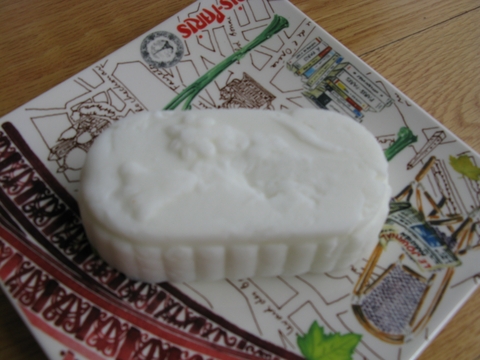
YEsterday I bought buffalo butter at the Matakana Farmers Market from the clever team at Whangaripo Buffalo Farm.
The butter is sweet and light, with a buttery texture but not at all oily or fatty. So far I have eaten spread it on my toast but
I am anxious to melt it on my freshly dug potatoes when I steam them, and to bake with it.
Who would have dreamed butter could be so white? But then the Whangaripo buffalo cheeses and yogurt are all pristine white rather than yellow or cream. How lucky am I to have this first ever buffalo butter?
22 January 2012

Welcome to the year of the Dragon! This year I was far away from a sophisticated City Chinese Restaurant for New Year celebrations. We had a wonderful local lunch at the appropriately and beautifully decorated home of J Barry Ferguson, one of those occasions where a well planned feast with several people contributing makes for a very special day.
Above are my friend Sandra’s rice paper rolls, a refreshing and apt start (but not before our host had initiated the fun with some loud firecrackers) to our big feast. We then moved to a delicious buffet selection of Chinese inspired dishes.
I contributed my now famous Oriental marinated beef (in my Listener column this week and in the Recipe section of this website) accompanied by a salad of celery, snowpeas and tiny green beans, scattered with the wonderfully fresh Vietnamese herbs I’d bought from Phuong Graham at the Matakana Farmers Market. I also made Fuschia Dunlop’s braised eggplant and tofu in a sticky dark sauce. Yum. Soy roasted chickens, tasty fried rice with prawns, ham and mushrooms and some soft doughy steamed buns rounded off the feast.
To finish, a spectacular cake with mango puree, chocolate, loads of rum and coconut cream. Delicious, delicious, delicious but no wonder that green tea slipped down so easily. “Chuc Mung Nam Moi!!!” as Phuong had said to me.
20 December 2011
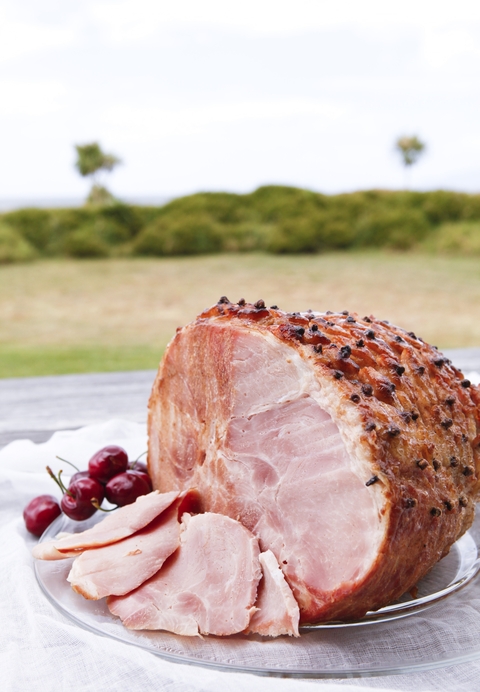
New Zealand’s pork farmers have taken a hammering in the media in recent times and the industry is all the better for the inquisition. Regular audits and an endorsement programme run by the SPCA Blue Tick campaign means that much of our locally raised pork can now be relied upon to be disease-free and from animals that live on “happy farms.” I like to think I am eating ham from an animal that has been humanely treated, with none of those crates, cages or pens, nor with growth hormones, antibiotics or tricky chemicals in the feed. This year look carefully at the labelling before purchasing your ham.
A few weeks ago, before the onslaught of the party season, I was invited to Nosh, a specialist food retailer in Auckland, to taste and evaluate ham. The Nosh chef sliced into a selection of hams, purchased from various supermarkets around the city, and we all read the labels carefully to check the origin and processing of each. There was no doubt in my mind, and in the opinion of other food writers present, that there were vast differences in the hams we tasted. Some were watery, some very fatty, and some with labels that read “contains imported and local products.” One imported ham actually stated it was 90% ham. What, I wondered, made up the other 10%? Those who know me recognize I’d never buy imported product if I can eat locally grown and raised food.
The two locally grown hams we tried, one the Black Rock brand (Nosh’s own), the other from Freedom Farms, were all agreed to be superior in flavour and texture to the imported hams. Luckily for us, local hams are widely available and those two are not the only fine quality locally produced pork. For many years I have ordered my ham from Holly Bacon in Hawke’s Bay, and I’m also aware of the many small butchers and pork companies throughout New Zealand who do an excellent job of growing and marketing pork products. I love the free-range Havoc products and brought some Waitaki pork back from the Food Show in Christchurch that my appreciative mother is still talking about.
Click on the RECIPES section of my website list opposite the photo of the ham (taken by Elizabeth Clarkson) and that will take you to recipes for a fantastic ham glaze and a recipe for a ham salad for the leftovers.
14 December 2011

Over the past weeks I have been busy and a couple of things I did have reached out to assist others.
Above is a photo that proves I do more than just eat and drink and I do get to exercise occasionally. (I'm the tallest golfer in the group in case you didn't recognise me!) I played in the Malaghan Intitute charity golf day and our team finished with the best girl's team score. With the help of Random House I donated a set of six cookbooks I have written or edited for the dinner auction that followed the golf. After fierce bidding a generous soul paid $600 for them for the Malaghan Instutute's wonderful research work.
Yesterday I received a letter to say the Dargaville Combined Churches Food Bank and The City Mission are grateful for a donation of 100kg of kumara in my name, to be used in the City Mission's Christmas Celebration Dinner. This is a result of Delta Produce Co-op in northern Kaipara appreciating an article I wrote in the Listener about kumara, complete with a couple of delicious recipes.
I feel good!
13 December 2011
Click on RECIPES in the list above on the right opposite for my most fantastic favourite Christmas recipes.
A complete menu that's all you will need this year, made with love for my family and yours!
7 December 2011
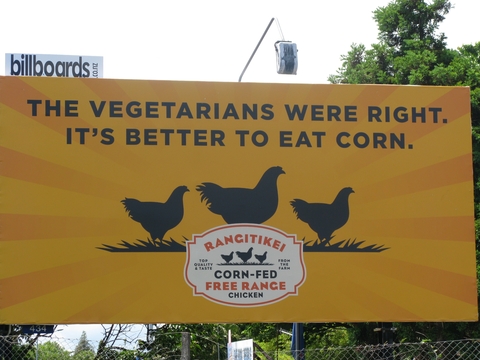
I spotted this billboard near my home and thought it very clever. We so often hear, 'you are what you eat', but not many of us ponder beyond that. So the diet of the animals we devour should concern us.
Corn, of course, as Michael Pollan and Eric Schlosser have informed us is probably the curse of the American diet. Not when it is fed to chickens, but when it is converted into corn syrup and finds it way into cereals, soft drinks and almost every processed food in the USA.
Here in New Zealand feeding corn to chickens is probably quite smart. Birds naturally choose to eat seeds and grains if they get a choice. These 'free-range' birds devour lots of corn and the carotene often turns the birds quite yellow, just like the Mexican chickens I first saw about 20 years ago in the Oaxaca market. They, like these birds, were delicious! Certainly the discerning NZ cook pays a premium for Rangitikei corn fed chicken with its rich corny, almost buttery taste.
Feeding corn to our New Zealand grass raised beef is a different story however. Just why those animals are 'finished' for their last 90 or 180 days in a feedlot on a diet of corn defeats me. The thing New Zealand grows best is grass (the short green plant that grows in the paddocks, not the other illegal kind that's hidden away.) We have an enviable advantage over most other beef producing countries as our animals graze year round on lush grasses and are healthy and delicious. Cattle naturally choose to eat grass, not corn!
Full marks to Tegel for bringing our attention to the chicken's diet and let's all think hard about just what animals eat. Maybe the feed should be on the labelling, just as the country of origin for all our food should be too.
5 December 2011
Last week I attended the Random House Christmas party. There's no doubt in my mind that the head honchos at the New Zealand branch of this international publishing house have some of the highest publishing values in the industry. Al Brown, Michael van de Elzen and Judith Tabron's restaurant books have all been stunning (last year's Martin Bosley takes the cake however for presentation) and Wanaka - the book from Whare Kea is outstanding. The party was great as there are always so many interesting authors and writers there from every sector of NZ life. My favourite chat is always with Ken Ring (we went to college together and he's rather misunderstood!)
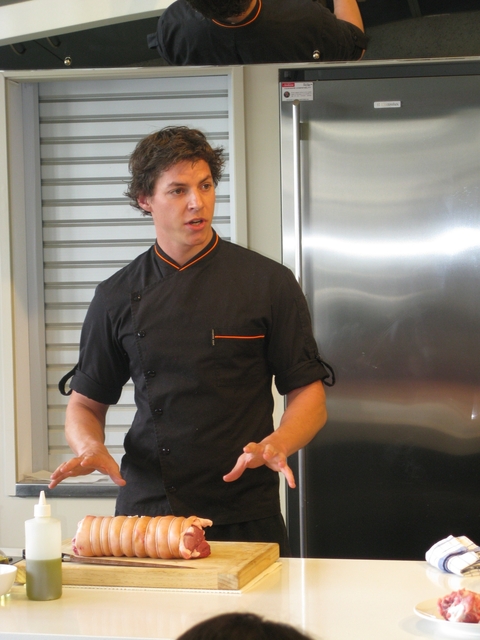
After the party I went with my co-authors of the NZ Vegetable Cookbook - still selling well - to Cru. Nick Honeyman, pictured above is the chef there. He's amazing, a young South African-born boy who has cooked with some of the best chefs Europe and Japan including Pascal Barbot of the highly acclaimed L'Astrance in Paris. He cooks a five or eight degustation menu that is intricate, indulgent and incredibly delicious. (There is a la carte too.)
Cru is tucked into the back of Sale Street. Luke Dallow, a seasoned and successful operator set the place up as a bar, hired Nick Honeyman to cook for both the extensive bar (and it's huge and noisy) and in an exclusive little restaurant at the back. Those in the know love it, as we did. The quail was exceptional; tender, beautifully seasoned and presented and we love Nick's playful approach to desserts.
But there's a big But. It's impossible to completely shut out the relentless, mindless thud of the bar music. DB ( a large NZ brewery company for those who don't follow beer) has bought the place. No doubt they see the upside in the bar trade. I hope they also see the incredible talented Nick Honeyman who they have in their kitchen and do something about sound proofing that incredible little space at the back.
Don't let me put you off. Go early and experience the food of one of the fastest rising chefs we have in Auckland (the young maitre'd is superb too) and let's hope DB can see this team for more than just bottom line profit. Nick Honeyman deserves recognition.