11 January 2010
The start of a new decade is a time for contemplation. Foodies have not been served well in the past ten years, IMHO. Around the beginning of this century we had a bright and burgeoning food scene with a terrific choice of foods, a real future in artisan production and some superb restaurants where individual chefs displayed unique skills and put together original clever food that they could stamp with their own individuality.
So what has gone wrong? We continue to have great food available, farmer’s markets have really taken off so enlightened cooks can shop locally each week and as New Zealanders we are exporting fine fare around the globe. But something is missing. We have a nation of people where many are seriously overweight and sick from bad diets, we don’t sit around the table enjoying fresh food and company on a regular basis anymore and too many of us buy all our food from a supermarket system of one stop shopping. (If we must do this at least we should try to favour the chain with local ownership and a real sense of community, where the profits stay firmly in New Zealand.) After all we’ve been through the decade where Michael Pollan, Eric Schlosser, Barbara Kingsolver and many more awakened us to the inherent dangers of much of our food supply chain.
First and foremost I blame the food writers. Too many, both here and overseas, have convinced us that we have no time to cook any more, that we can put a meal on the table in about 5-10 minutes by merely ‘assembling’ ingredients and that our store cupboard should be filled with tins, frozen packets and pre-cooked foods. They produce endless recipes that seem remarkably similar and have forgotten about the joy of simple food, carefully chosen, beautifully cooked and lovingly served. Everyone can find time to cook properly, as it is a matter of organisation and prioritising time.
Secondly, I blame the rise and rise of food on television. Not the wonderful food programmes where passionate cooks like Rick Stein, Hugh Fearnley Whittingstall and the amazing team at Market Kitchen in the Borough Market in London’s East End inspire us. But think about all those hideously competitive cooking programmes like Iron Chef, Master Chef, Hells’ Kitchen, Chopping Block, Ready Steady Cook and other ridiculous reality shows where cooks are reduced to tears and cooking is viewed as passive entertainment so people dial up pizzas while they watch. Food as competition does not inspire people to cook, just to watch criticise, and often cringe.
Thirdly the rise of molecular gastronomy or in its new guise, techno-emotional cooking. Chefs have moved away from glorious simple delicious food that is not mucked about and seem to emulate Ferran Adria, Heston Blumenthal or Grant Achatz. Those guys are experts, know what they’re doing and have refined their techniques over many years. A young chef should not read the latest book and instantly become an expert, unleashing experimental food on the paying public.
Bring back beautiful fresh food that’s not mucked around with.
There are many more reasons for concern, and also many good things to celebrate. But all is not lost. We do have some superb practitioners in our restaurants, we have many intelligent and thoughtful food writers and we can take inspiration from the world’s best real cooks on our screens. And good food is there for the taking (or buying is probably a better word.) So let’s make this the decade where we actively all think carefully about what we eat, who we support, and ensure we celebrate great food, cooked with love that can be enjoyed around the table with appreciative and thoughtful friends and family.
20 December 2009
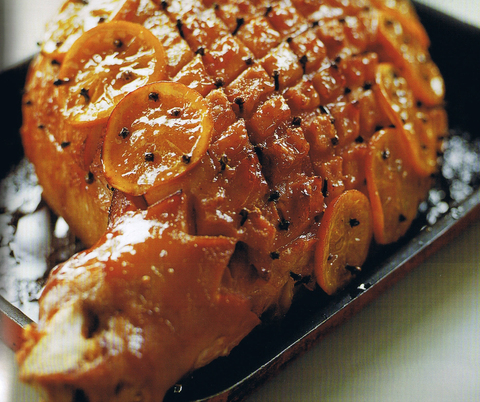
I have been thinking about Christmas food all week, but don’t have too many worries as my sister has let me off the hook this year and will be doing the family feast at her place. But I have had calls from three different people this week wanting to buy copies of my book “The Confident Cook” as there are two recipes they absolutely need for their Christmas feast. I want ot share these two all time stars with you.
There’s nothing like a ham, gleaming with a sticky glaze, moist and pink and still warm from the oven. There’s always far too much to eat at one sitting so over the days after Christmas meals and snacks become easy as the ham sits in the fridge. At our place you can observe many of those Nigella moments when various family members sneak to the fridge and slyly slice a sliver or two of ham when they’re hungry.
And here’s a tip to get the most out of your ham:
Wrap the ham in a tea towel or special cloth ham bag that is kept moist by dipping the cloth in a solution of water and white wine vinegar. Keep refrigerated at all times.
And Salade Rouge is a vegetable salad I dreamed up for a Christmas feature about four years ago. I wish I had a dollar for every reader and fan who has stopped me to tell me how much they love that recipe. It’s easy to prepare ahead, looks remarkably festive with the contrasting shades of red and is really delicious.
Carrots, beetroot, roast red peppers, tomatoes, red onions and basil are bathed in a lovely dressing made with orange juice and honey. I can guarantee this will become part of your festive recipe repertoire.
Here are these two all time favourites:
Enjoy!
Salad Rouge
My most requested recipe of all time. Properly cooked vegetables are the best part of a meal for me. This bright fresh vegetable salad with contrasting crunch and flavour adds a real hit of colour to the festive table. Prepare everything ahead, refrigerate but bring back to room temperature before serving.
- 5 small red peppers, de-seeded, stalks and membranes removed and cut into wedges
- 3 small red onions, peeled and cut into wedges
- 4 medium beetroot
- 4 large carrots, peeled and cut into neat diagonal slices
- 2 large acid free tomatoes
For the dressing:
- 1 orange, juice and zest cut in thin strips and blanched
- 1 tablespoon runny honey
- ¼ cup olive oil
- salt and freshly ground black pepper
- a few fresh basil leaves for garnish
Heat the oven to 180ºC and roast the pepper and onion wedges until soft and mellow (about 25 minutes.) Keep aside
To prepare the beetroot, boil in water for about 40 minutes until tender, cool and remove the skins. Cut into rough chunks.
To prepare the carrots, cook in salted water with a pinch of sugar for about 10 minutes, until soft but not mushy. Keep aside.
Wash the tomatoes well and cut into neat chunks.
Make the dressing by mixing everything together in a small screew top jar.
Place the vegetables on a large white platter, and drizzle over the dressing. Garnish with a few torn basil leaves and serve at rooms temperature. Serves 10-12.
Traditional Glazed Ham with fresh orange slices
Cooked hams are improved by very slowly heating them in the oven and glazing with juice, sugar and spice to give extra sweetness. Choose a ham on the bone, or, for really easy carving, a “champagne” ham with almost all the bones removed is far chunkier and rounder than the traditional ham on the bone.
- 1 whole cooked ham on the bone (6kg to 9kg)
For the glaze:
- 1 cup brown sugar
- 1 tablespoon cardamom
- 1 tablespoon Dijon mustard
- 1 1/2 cups fresh orange juice
For the garnish:
- Sugar syrup made with 2 cups water and 1 cup granulated sugar
- 3 oranges
- 3 tablespoons cloves
Carefully cut around the skin at the shank end of the ham, leaving about 6cm on the bone. Remove the skin from the ham by sliding your fingers under the skin to loosen it, leaving a good coating of fat on the ham.
With a sharp knife score the surface of the fat into small even diamonds. Place the ham in a large baking dish and pour over one cup of the orange juice.
Put the ham in an oven pre-heated to 160°C and cook for about 15 minutes per kilogram. (Hams are generally between 6kg and 9kg.)
About 15 minutes before the total cooking time, remove the ham from the oven and turn the heat up to 200°C. Mix the sugar, cardamom and mustard together with the remaining orange juice and spread this over the ham. Place in the oven and cook for the final 10-15 minutes so the skin is nicely glazed. Remove and decorate with the oranges and cloves.
To make the orange garnish, bring the sugar and water to a simmer, making absolutely certain all the sugar is dissolved before the syrup boils. Allow the syrup to boil for 20 minutes to reduce and thicken. Cut the oranges into thin slices with the skin on, and drop them carefully into the syrup. Poach for 5 minutes and leave in the syrup to cool.
The ham can be done well ahead, but keep refrigerated until serving.
18 December 2009
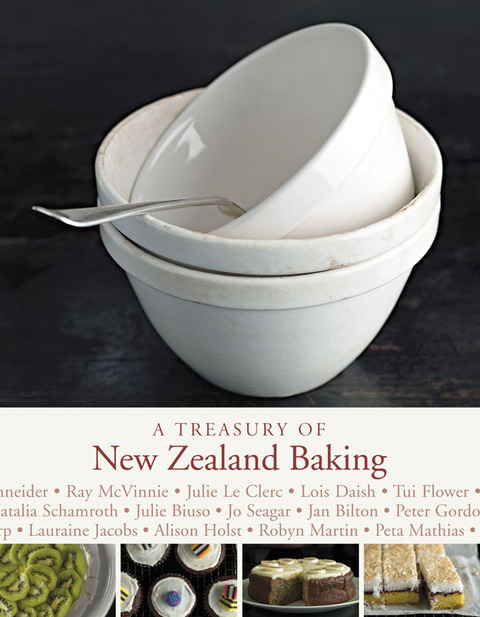
This year I edited a great book, A Treasury of NZ Baking, which was published by Random House. It’s a very feel good story as generosity is at the very core of the project.
New Zealand’s top food writers and chefs shared their very favourite recipes, legendary food writer Tui Flower wrote her “baking wisdom” tips and hints. Celebrity baker Dean Brettschneider flew in from Shanghai courtesy of Air New Zealand to bake every recipe for photography. The AUT patisserie students assisted him in the school’s kitchens and learned lots in the process. Aaron McLean, NZ’s top food photographer by a country mile, shot all the photos in three days and the Auckland City mission got to serve all the baking to the hungry and needy at the end of each day.
But it does not stop there. All the royalties from this book go to the Breast Cancer Foundation and as the book went to Number 1 on the best seller list, the foundation stands to make a handsome sum.
In the spirit of Christmas and to honour the munificence and spirit that built this book, think about giving it to someone who will appreciate the story and the 104 beautifully photographed timeless recipes.
15 December 2009
Our house would be cleaned until everything sparkled, the silver polished, rooms filled with glorious arrangements of flowers from the garden, lawns mowed and hedges clipped neatly, and the fireplace set and ready to light as my mother began her preparations days ahead of her dinners.
As a child I eagerly anticipated these dinner parties my parents arranged. The highlights for me were always the yeasty aromas wafting from the kitchen as Mum made her soft little dinner rolls and the buttery smell of the thin fingers of bread baked until they became crisp golden crunchy toasts to accompany her velvety first-course soups. As a dutiful daughter I’d help by setting the table but my real motivation was to sneak a toast or two from the dish of neatly stacked piles she’d place at each end of the table, and to pop a roll or two into my pocket to eat out in the garden where no-one could see me. She knew of course, but turned a blind eye.
When I think about my early years, it’s not the books I read, the games I played or the school lessons I remember. It’s the delicious meals and snacks that we ate as kids, growing up in a house where generosity and great food were paramount. My mother was a great cook. (She still is at 86; ask the bridge ladies or the ‘Ravers’, a gourmet group that still enjoy lovely home cooked food when they gather at her house.)
There was never a problem getting workmen to come to our house. All the sparkies, builders, plumbers and painters around knew that they’d stop mid-morning for a cuppa and a pile of still warm cheesy scones or light-as-air fruity muffins that Mum insisted on baking for them every day. As children we accompanied our parents to their tennis club every Saturday and Sunday summer afternoon. We would pile into the car and Dad would get anxious and often impatient to get going as we waited for Mum to put the finishing touches to the plate of baked goodies, or ice the cake she was taking along for afternoon tea at the club.
When we arrived back from school, hungry from our day’s activities and the long walk home, there was always a special treat waiting. Mum baked cakes, buns, biscuits and slices to fill the tins. Ginger gems, jam slices, melting moments, apple turnovers, Eccles cakes, cheese cakes with their hidden surprise of raspberry jam and the little twisted knot of puff pastry atop, cinnamon oysters and gooey iced chocolate cakes. I loved them all.
She would also spoil us in hot weather with special drinks like chocolate milk- shakes. I remember my favourite; Mum would ladle large scoops of vanilla ice cream into tall glasses and then pour over fizzy drink to make ‘spider drinks’ for us. The glorious froth on the top was devoured and I loved scooping out the last drops with the long spoons she provided for the occasion. Mum made her own ice cream too. There were two aluminium trays that she would use to freeze a mixture of sweetened condensed milk, sugar, vanilla and cream and then she’d froth this up in the electric beater before returning the icy mixture to freeze again. It was heavenly!
Like many keen cooks more than fifty years ago, much of the food Mum served was supplemented by fresh vegetables straight from the garden. I lived in three houses as I grew up, and each had a great vegie garden that both Mum and my father tended. Our first house, the modest suburban brick and tile home built when they married, had a backyard that was Dad’s pride and joy. Neat rows of lettuces, tomatoes, beans, beetroot, corn, potatoes and peas fed us throughout the summer, garnished with the only herbs we knew back then, mint and parsley - the triple curled variety of course. Surplus tomatoes were bottled or made into a home-style tomato sauce that Mum still makes for her church’s fair every year.
I remember when our parents’ best friends, a farmer and market gardener in Mangere started growing a new almost revolutionary crop, broccoli. We children hated this new vegetable. Years later I learned to love it but not quite as much as Mozart, my own children’s cat, who had such a passion for broccoli he would jump on the bench as I served up our dinner, and steal a sprig or two from the plates.
The second house we lived in, a fairy tale double-story house in Mt Eden, had more than half-acre of grounds. This garden provided plenty of space for large gardens where vegetables and fruits flourished, and an ancient walnut tree towered over everything providing a crop of creamy walnuts every year. The nuts were delicious but a real nuisance to me as I was sent out to rake up the fallen nuts before Dad could mow the lawns.
A previous owner of the house had built a fully enclosed dog run and this was put to good use one year when my mother offered to look after her sister’s chooks while my aunt took the one and only holiday she had in her life. Mum relished the opportunity to gather a basket of freshly laid eggs for her baking each day, but I remember the chooks flying around and escaping into the garden. A true city girl, I was terrified by their flapping wings and sharp beaks and still run for cover if a bird comes near me.
Then we moved again and I’m sure it was the well organised garden that drew my parents to that house. Espaliered Golden Delicious apples, a large persimmon tree, lemons, oranges and weenie grapefruit surrounded the vegie plots, and my parents seemed to enjoy the many hours they spent on the garden there.
This was the home where I learned to cook. I recall making chocolate fudge and helping in the kitchen with all sorts of baking. Mum was very tolerant and I made spaghetti Bolognese as a surprise for her dinner one night. She has a remarkable palate, as a good cook should, and tactfully suggested it needed to be much tastier. It’s probably at this moment that I developed my need for plenty of salt in everything. I’m always surprised when I read through the collection of baking recipes she has saved over the years at just how many sweet baked goodies and cakes specify a pinch of salt in the ingredient list.
The more sophisticated cuisine that arrived with the late sixties probably underpins some of the best food we continue to eat this century. I have vivid memories of Mum spooning the flesh of an avocado into her mouth, which to us kids looked decidedly dodgy. “But it tastes like butter,” she’d say. We had a coffee grinder too, and brewed proper coffee in an age when everyone else drank Nescafe or Gregg’s instant coffee. We ate chicken livers for lunch on Saturdays and on Sunday night my mother invited friends over and would serve up macaroni cheese, lasagne or some other glorious baked dish with a lovely tossed salad. This at a time when everyone else was making layered salad and accompanying it with the so- called ‘mayonnaise’ made from Highlander condensed milk.
And nothing can still compare to the original recipe for bacon and egg pie, my father’s all time favourite meal that Mum baked for every picnic, Sunday night tea and on plenty of other occasions.
Being the good mother she was, Mum encouraged me to cook and together we went to Cordon Bleu classes at the local community night school. We both developed a love for the rich and complex dishes we prepared and took home for our dinner. The seeds of my cookery career were sown at this point, for several years later I sailed away from Auckland on the Iberia on an overseas adventure, already enrolled at the famous Cordon Bleu School in London.
I had learned to bake at my mother’s side. My cheese scones turn out exactly like hers. My meringues are identical too, and when I shared her “Patricia’s Pavlova” recipe in Cuisine last Christmas, it was rewarding to receive letters from readers who recognised it as my mother’s recipe.
Cordon Bleu, however introduced me to a completely new world of baking. French style patisserie. We spent one day a week baking and a whole wealth of fine cakes, petit fours and desserts were added to my repertoire. I learned to garnish and decorate my baking with a far more professional touch than I ever remember my mother doing. The art of piping cream, making glossy icing that was smooth as a sheet of cardboard and neatly setting out food in rows as straight as soldiers on parade gave an edge to my baking that was far cry from the traditional Kiwi baking that had its roots in the clubs and churches of the Antipodes.
But today, when my family wants something really that is satisfying and tasty, and yet easy to make, I turn to Mum’s old recipes and bake her traditional treats. We have a real heritage of baking in New Zealand, along with gardening, and it’s satisfying to see so many people who are rejoicing in the resurgence and popularity of these neglected but not forgotten skills.